When The Parliamentarian — the Journal of the Parliaments of the Commonwealth — published its 2026 Volume 107, Issue One, the editorial focus on the cover was Harnessing Technology and AI to Strengthen Democracy. Inside, in a feature titled "Parliamentary Innovation Using Technology and AI," the journal profiled the Anguilla House of Assembly's adoption of an AI-driven transcription platform.
That platform is WhoSaidWhat. We built it.
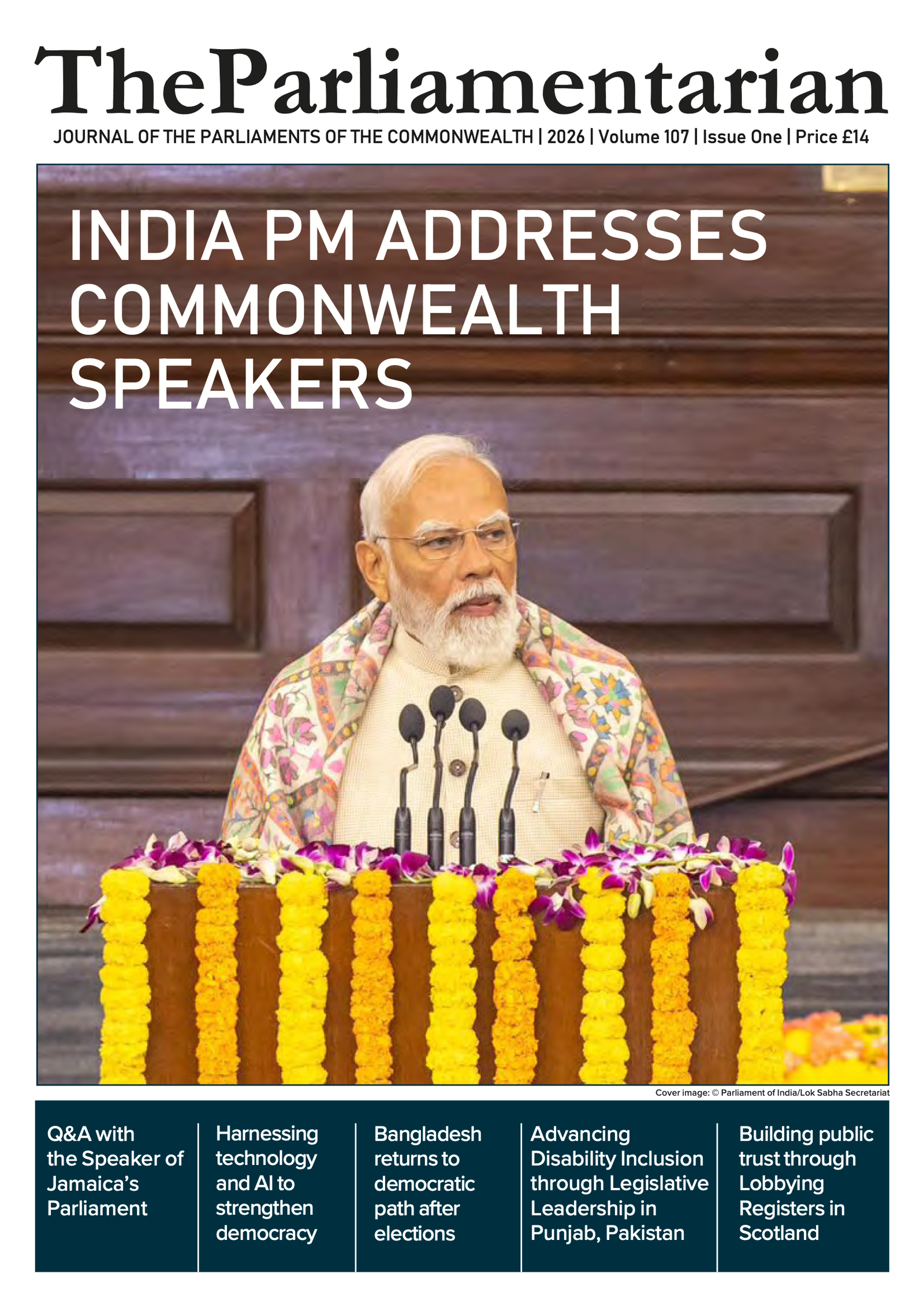
For a small studio working out of Anguilla, being written about in The Parliamentarian is not a small thing. The journal has been published for more than a century. Its readers are the people who actually run parliaments — clerks, speakers, parliamentary staff and members, across every Commonwealth nation. Its editorial pages don't carry advertorial. When something appears there, it's because the editors decided it was worth knowing about.
What the article documents, in the publication's own words, is what the system has done for the House:
"What once took days or even weeks can now be accomplished in hours, providing constituents with rapid access to the official record of their Parliament's work."
And for the staff who produce that record:
"A single transcriptionist can now produce in hours what previously took weeks, while retaining essential human oversight for accuracy and parliamentary conventions."
We've been quiet about those numbers because the work, not the claim, is what matters. But hearing them stated back to us by an editorial publication carries a different weight than saying them ourselves.
The piece goes further than the workflow. It places Anguilla's deployment alongside the Kuala Lumpur Declaration — the framework on responsible AI in parliaments issued jointly by the Commonwealth Parliamentary Association, the Inter-Parliamentary Union, and UNDP. That framing matters to us. We didn't build WhoSaidWhat as a productivity tool. We built it as a piece of institutional infrastructure — something that has to be accurate, accountable, and governed responsibly, because the official record of a parliament is not an internal document. It's the public memory of a democracy.
There's a second thread the journal pulled out that we feel responsible to keep going.
Anguilla is the original custodian of the .ai internet domain. The world now recognises .ai as shorthand for artificial intelligence, but it has been Anguilla's country code for far longer. The journal observed that our deployment "demonstrates that Anguilla is not merely the custodian of a valuable digital asset, but an active participant in the technological revolution it represents."
That's the part we want to live up to. Anguilla shouldn't only be where the domain lives. It should be where serious AI work gets built. WhoSaidWhat is one piece of evidence that it can be — engineered locally, deployed at home first, and recognised abroad on its own terms.
The other thing this coverage has done is sharpen our sense of who else this work is for. Every parliament in the Commonwealth faces the same record-keeping challenge in some form — small chambers more acutely, larger ones at greater scale. The article frames Anguilla's deployment plainly:
"as a potential model for other small Legislatures facing similar challenges."
That's an invitation, and we mean to honour it. The same system serving our House can serve any legislature, committee, or council that needs an accurate, attributed, official record of what was said and by whom.
We're proud of the recognition. We're more interested in what comes next.
Being written about is a beginning, not a finish line. We built WhoSaidWhat for one parliament because that parliament is home. We built it to travel because the problem it solves doesn't stop at our shores.
— Wil